

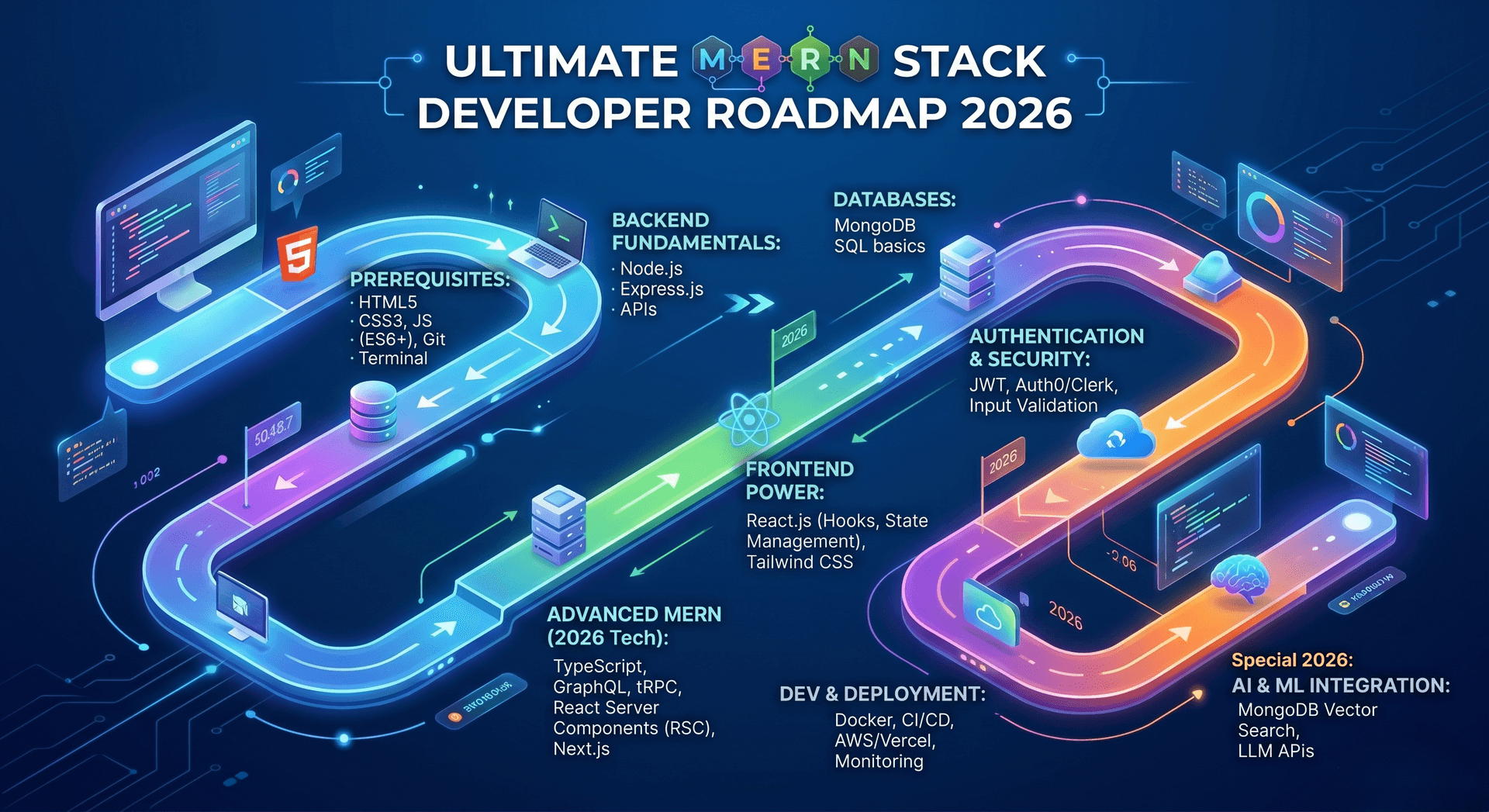
Explore the ultimate mern stack developer roadmap 2026. Build scalable SaaS platforms with modern React and Next.js. Expert web development by Kraviona.
The Ultimate MERN Stack Developer Roadmap 2026
One moment everything changes online - yet apps built with fast, expandable JavaScript keep pulling attention. Founders of companies, leaders at agencies, heads guiding tech teams - they all need strong foundations when crafting SaaS systems or large-scale web gateways. Picture shaping your development crew, spotting elite engineers, weighing tools for an upcoming release: here, guidance matters. Step by step, a clear path through the evolving mern stack developer roadmap 2026 becomes what shapes smart choices.
Right now, the MERN setup - MongoDB, Express.js, React.js, Node.js - is doing much more than just powering basic web apps. Thanks to new tools, it handles tasks closer to users, uses smarter data systems, improves page loading behind the scenes, while keeping code safer through strict typing. Engineers are zeroing in on these upgrades, shaping how companies get real results from their tech choices this year.
MERN Stack Developer Roadmap 2026: Relevance for Business
Picking tech isn’t only about code - it shapes how a company moves. What builders work with affects speed, growth room, cost down the line. MERN stays on top since one tongue fits all parts: JavaScript, sometimes now TypeScript. Using the same speech cuts mental gear shifts, pushes features faster, helps move coders around where they’re needed.
The Rise of React and Hybrid Architectures
Right now, React still leads when it comes to making dynamic UIs. Still, how big companies apply React isn’t what it used to be. Client-only approaches are losing ground - now teams lean into tools like Next.js, blending server-rendered pages with pre-built static ones almost effortlessly. If traffic spikes start slowing things down, simple setups won’t hold up. Speed matters, so does search visibility; shifting toward optimized patterns can sharpen load times and keep users engaged longer.
If you want a fast loading site, you should consider Next.js performance optimization to ensure perfect architecture.
Node.js with Express and MongoDB for Backend
Out back, where things run without pause, Node.js teams up with Express to manage huge crowds of live links using little weight and smart timing. Over in storage territory, what once held basic records now pushes far ahead - MongoDB tackles tough pattern hunts inside data streams, fitting right into programs that learn and adapt on their own.
Navigating the MERN Stack Developer Roadmap 2026
Curious about today’s app builds? If you lead tech teams or write code, this path shows exactly how to learn every layer of the stack - step by step through the year. While platforms like roadmap.sh offer excellent broad visual guides for developers, understanding the specific mern stack developer roadmap 2026 reveals exactly how to build enterprise-grade software. One skill follows another. Mastery comes only after each piece clicks into place.
Foundational Skills and Type Safety
Truth be told, skipping straight to frameworks without mastering modern JavaScript (ES6+) sets up even experienced coders for trouble. By 2026, though, one thing stands out: ignoring TypeScript means falling behind - everyone uses it now.
- TypeScript Mastery: Deep inside TypeScript, generics shape how code adapts to different data forms. Picking up utility types reveals shortcuts that reshape existing types without extra effort.
- Strict Configurations: Turning on strict mode changes how errors are caught during development. Each setting adjusts behavior in subtle but powerful ways.
- Data Validation: When data moves from user to system, tools such as Zod check every piece carefully - so mistakes don’t slip through. Wrong inputs get caught early because strict rules are applied before anything processes further. This kind of checking stops small issues from turning into app failures during important tasks. Reliability improves when each value is confirmed right away instead of later down the line. Zod acts like a filter, only allowing clean, correct data to pass forward. Without it, unexpected formats could break features users depend on daily.
Mastering Frontend Dynamics in Modern Development
Starting with the front end, a developer moving through the mern stack developer roadmap 2026 must go beyond basic components. Instead of stopping at layout building, thinking about how data flows becomes key. With time, organizing code matters more than just making it work. Because user interactions grow complex, handling state wisely takes priority. So structure shapes success, not just visuals. One way or another, planning ahead beats fixing later.
- Server Components: Out in the open now - React 19 brings server components into sharper focus. Code runs nearer to data stores instead of loading everything on the client. Big chunks of JavaScript fade away when processing shifts upstream. Less travels over the wire because rendering happens earlier in the chain. Efficiency shows up quietly through reduced payloads. The browser gets relief without fanfare. Work spreads where it fits best, not just piled onto user devices.
- State Management: State handling gets simpler now. Out with the old Redux clutter. In come leaner options - Zustand steps in quietly, doing more with less noise. Redux Toolkit fits too, cleaning up what used to be messy. Complexity fades without losing control. Tools evolve, so does how we manage data across apps.
- UI Frameworks: Beautiful interfaces come together fast when mixing tools like Tailwind CSS with Shadcn UI. These building blocks keep designs flexible while ensuring they work well for everyone. Speed does not mean cutting corners here - custom looks stay intact. Each piece fits accessibility needs right from the start. Rapid testing shapes how things look, feel, and respond. Flexibility remains even after everything clicks into place.
Constructing a Flexible Strong Backend
Security comes first when building a backend, yet speed matters just as much. What keeps it useful is how well it connects to outside tools. Third-party systems need smooth links without slowing things down.
- API Design: Building APIs means shaping REST rules carefully - sometimes swapping in GraphQL where links between data run deep, other times choosing tRPC when types must stay locked from start to finish. The path shifts depending on how pieces fit together behind the scenes.
- Authentication: Security checks start with verifying identity, then deciding access levels. Using OAuth 2.0 helps apps confirm who you are without storing passwords. Instead of old-style logins, tokens speak for you - JWT packs user data safely. Tools such as NextAuth bring these pieces together smoothly. Another option, Clerk, handles sign-ins while keeping setup light. Each method links steps so only the right people reach the right spots.
- Caching: Start fast. Store common data lookups using Redis when running Express on Node.js. This cuts down how often the app hits the database. Less strain on the server shows up as quicker replies from the API. Speed builds up quietly behind every repeat request.
Phase Four Database Shifts and Cloud Systems
Out here, information keeps companies running day to day. For a skilled coder, designing databases that grow sideways isn’t just useful - it’s expected. Over time, patterns shift; structure matters more than ever. One wrong turn in planning can ripple outward quietly but fast. Efficiency hides in how things connect behind the scenes. When traffic spikes, loose setups break - tight ones bend then hold.
- MongoDB Mastery: Picture intricate data flows built through layered MongoDB stages, each step feeding into the next. Indexes quietly speed up frequent lookups without slowing down inserts. Data shapes shift intentionally, sidestepping typical snags in document design. Mongoose models guide structure while staying flexible under pressure. Complex queries unfold smoothly when planned ahead of time.
- AI Integration: Picture searching by meaning, not just keywords. That happens when data meets smart lookup in MongoDB Atlas. Think of it as teaching machines to understand intent. Results get smarter using vector patterns behind words. Recommendations shape up without rigid rules. Instead, connections form through hidden similarities. Large language models plug in naturally, feeding off rich datasets. No extra layers slow things down. Everything works together because structure follows thought.
- DevOps: Testing tools like Jest and Playwright run checks automatically. Applications move into live environments through Docker, guided by workflows on GitHub. These steps connect in a smooth line, each triggered without manual pushes. The process repeats reliably, shaped by code behavior and container logic.
How Buildings Grow and Why It Matters to Work
Mastering React or Express syntax marks only step one. What truly sets apart elite developers - the absolute core of the mern stack developer roadmap 2026 - is skill in designing complex systems. When users jump from thousands to millions, everything underneath has to shift smoothly, yet stay clean and manageable.
Start strong if you're building something online meant to last. From the beginning, think ahead about how it'll handle growth.
If you want a fast loading site, you should consider custom website development services to ensure perfect architecture.
When apps lack good design, they cost more to run, crash often, stop working at bad times, plus people using them get annoyed. On days when things are built right - with tools like MERN - the whole system flexes easily, grows without trouble, adds updates smoothly, stands firm.
Edge Computing and Serverless Deployments
Now things run differently out there. Instead of giant single machines doing all the work, today’s MERN setups spread tasks across tiny on-demand pieces. These bits live near where people actually are, thanks to places like Vercel or AWS handling code right at the network’s outer edges.
One way to look at it: someone in London opens your MERN app and lands on a European server node instead of reaching across to California for data. That shorter trip matters most when every millisecond counts - like online stores loading fast, stock screens updating live, or video hubs serving big files. Knowing how edge runtimes work, plus tuning database links for serverless setups, shows up everywhere in what developers need now.
Working Together for Better Digital Results
Most people think following a tutorial is enough, yet real skill comes from doing. Business needs shape how tools are used, which matters far beyond theory. Even though MERN offers strong capabilities, its open-ended nature risks messy code when structure falls apart. Without clear rules early on, things spiral faster than expected.
Technology moves faster when it works for your goals. What you need is not another coder but someone who builds with purpose. Moving an old system forward takes more than copying data - it needs foresight. Startups chasing investment require sharp tools, not just software. Big platforms under pressure reveal weaknesses unless they are built strong. Success often hides in how well systems grow with demand. Picking the right team shifts outcomes quietly but completely, finalizing your journey through the mern stack developer roadmap 2026.
Amar Kumar
April 20, 2026