

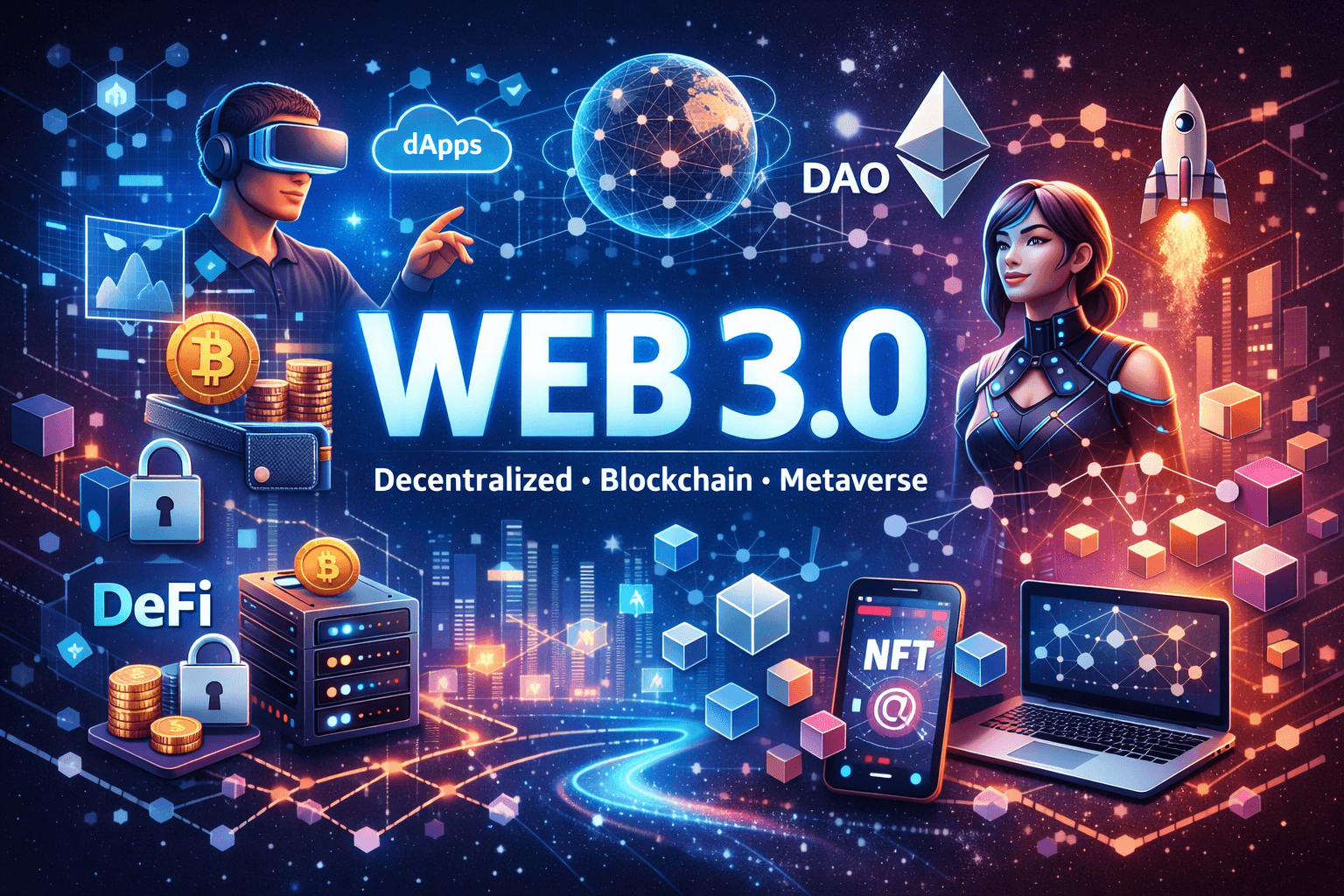
Web 3.0 enables data ownership decentralization, and enhanced security, giving users more control, privacy, and trust in a smarter, safer digital world.
Understanding Web 3.0
Web 3.0 isn’t just the next version of the web - it’s reshaping how everything online functions through the various Benefits of Web 3.0. Imagine going from paying rent to having full ownership of your space. Big tech used to run things: platforms, data, earnings - all locked down tight. Now, people get control over their digital lives thanks to new tools behind this update. This change flips who holds power now - companies, artists, regular folks, everyone. The entire dynamic shifts underfoot without warning.
Web 3.0 runs on blockchain, uses smart machines, connects through spread-out systems. Not tied to big company hubs - information lives on many separate computers at once. When one part fails, others keep going; control becomes harder to seize. Power shifts toward users, decisions get less top-down. Numbers from well-known tech trackers suggest worldwide value may jump past eighty thousand million dollars near 2030, growth seen strong in banking, medicine, other fields.
Now comes a shift - sharp, noticeable - in what users expect. Not just wanting more clarity but demanding say over their own information. Fair treatment matters too. Curiosity about data trails grows stronger every day. Understanding usage patterns becomes non-negotiable. Into this space steps Web 3.0, built for these demands. Trust gets baked right into the tech, not left up to companies to do the right thing. This idea hits hard, moving the digital economy quicker than most thought possible.
Now picture a web where machines grasp meaning, not just data. This shift digs into habits, wallets, minds. Connections turn smarter, fairer, deeper. Value flows without middlemen holding keys. Once the pieces click, resistance feels outdated.
Web 1.0 to Web 3.0 evolution
Seeing what Web 3.0 offers means starting from the beginning. Picture an old quiet village slowly turning into a busy worldwide hub. That change? It happened online too. First came basic pages anyone could read but not touch. Then interactive spaces opened up where people shared, posted, changed things. Now control shifts again - this time toward users owning pieces outright. Every leap brought tools that reshaped habits. Problems tagged along each step forward just like progress did. Knowing how it unfolded makes today's move clearer. This latest turn isn’t minor - it carries weight.
Back then, most online pages just sat there. Web 1.0 ruled the nineties - think of it as a library made of screens. Folks clicked through sites but rarely left marks. Companies posted details while people looked around quietly. Reading replaced doing. Interaction? Almost none. Like flipping through a paper, only glowing. Back then, websites didn’t let people post replies or share stories. Pages shared facts - yet stayed one-way, like signs on a wall.
Web 2.0 arrived next - suddenly people weren’t just browsing but posting, connecting, reacting. Sites such as Facebook, YouTube, and Twitter turned online spaces into lively hubs where interaction ruled. Instead of reading silently, users began crafting stories, uploading videos, forming groups. Money followed attention, naturally. Year after year, ad income swelled; by 2024 it stretched far beyond earlier guesses, hitting vast sums each twelve months. Still, Web 2.0 brought a big downside - control shifted to central platforms. These firms gathered vast piles of personal information, then made money from it, usually without clear permission.
Here begins a shift toward Web 3.0, powered by decentralized networks. Ownership of personal information moves away from big platforms, landing back in users' hands. Digital agreements execute themselves once conditions are met, skipping middlemen entirely. Money flows directly between people worldwide, nearly instantly, using crypto instead of banks. Running nonstop, this setup acts less like an institution, more like code doing its job - quietly, constantly. 💡
Power moves where tech grows. From relying on others, people now take control themselves. Control spreads out instead of piling up in one place. This change shapes what Web 3.0 really means. Because of it, companies and nations pour resources into building what comes next.
Web 3.0 Core Technologies
Deep inside each game-changing setup hides tech pieces doing silent heavy lifting. For Web 3.0, it's these parts that build a digital core focused on safety, control, by itself, speed. Take those away, and the idea of an internet without central power vanishes into thin air. Getting how they work shows this isn’t noise - it’s real progress, grounded in code.
Picture this - artificial intelligence sits at the core of modern tech advances. Systems powered by it process huge volumes of information, then act on insights all on their own. Think of searching online where results grasp what you really mean, not just your typed words. This shift? It turns the web into something far more responsive. Rather than sitting idle, waiting for commands, it begins to predict what comes next.
Out there, the Internet of Things quietly reshapes how machines interact. Sensors grab live updates straight from everyday environments - helping systems respond faster without waiting. Picture thermostats learning habits or factories tracking equipment health nonstop. These gadgets link up, passing information like whispers across a room. When tied into Web 3.0 setups, their records settle into shared ledgers instead of single servers - making leaks harder, breakdowns less likely.
Imagine tasks being handled by several computers at once, rather than just one big machine doing all the work. Spreading things out like this tends to make systems run smoother and recover better when something goes wrong. Picture a group passing pieces of a job around - each handles part without waiting too long. Effort gets balanced naturally, cutting down delays that slow everything else behind it.
Turning smoothly, these technologies fit into place much like cogs in a carefully built mechanism. Because they connect tightly, information moves safely through the system. Automation handles exchanges without needing constant oversight. Control stays with individuals using it, not hidden behind layers. This quiet coordination sets Web 3.0 apart from how the web worked before.
Blockchain and Decentralization
Right there in the middle of Web 3.0 sits something familiar yet often unclear - blockchain. Imagine a record book made of code, tracking each move with openness and strong protection. Change only happens when everyone agrees, not just one player deciding alone. After an entry lands on this chain, shifting it becomes nearly impossible. Because of how tightly it holds truth, trust naturally builds around it. 🔐
What keeps blockchain running is decentralization. Not one company runs it - instead, pieces live on many separate machines worldwide. Everyone involved gets their own version of the record, so control stays spread out. With no central point, tampering becomes far harder. Outages, interference, dishonest changes - these slip through less often now.
Big wins show up for companies. With each step logged, supply lines turn clearer since approved users see what happens. Payments move quicker through banks, cheaper too - middlemen fade out of the picture. Public work gets stronger when governments issue safe digital IDs to people. Real uses like these reveal how spreading control helps regular tasks run better.
Now picture this: some top minds call blockchain the digital era’s way to build trust. Don Tapscott once put it like this - blockchain is the next wave of the internet, one where value moves freely. This idea sits at the heart of what people now label Web 3.0. Information sharing still happens, yet something bigger has started too. Assets shift hands, ownership gets clearer, confidence grows - all within a protected online space.
Nowhere else has technology shifted power quite like this. With every passing day, people gain more control over their own data and transactions. Business tasks take less time because middlemen fade into the background. Out of thin air, fresh paths open up - paths nobody could have predicted ten years back.
F & Q (Frequently Asked Questions)
1. What are the primary Benefits of Web 3.0 for regular users? Users gain complete ownership of their data, enhanced privacy, and the ability to interact directly without relying on big tech intermediaries.
2. How does the Web 3.0 evolution improve online security? By using decentralized blockchain technology, Web 3.0 removes single points of failure, making it much harder for hackers to breach the entire network.
3. Will the Benefits of Web 3.0 include faster transactions? Yes, by using peer-to-peer networks and smart contracts, Web 3.0 removes the need for manual processing by middlemen, speeding up global value transfers.
4. How does data ownership work in the Web 3.0 landscape? In Web 3.0, users store their data in decentralized wallets. You grant permission to platforms to access it, rather than platforms owning it by default.
5. What role does AI play in the Benefits of Web 3.0? AI enables a "Semantic Web," where machines understand the context of data, providing more personalized and accurate search results for users.
6. Can Web 3.0 help artists and creators? Absolutely. One of the major Benefits of Web 3.0 is the ability for creators to tokenize their work, ensuring they get paid directly and receive royalties automatically.
7. Is Web 3.0 more resistant to censorship? Because information is spread across a decentralized network, it is much harder for any single entity or government to shut down or censor content.
8. How do smart contracts contribute to the Benefits of Web 3.0? Smart contracts automate agreements. They execute only when conditions are met, ensuring fairness and reducing the cost of legal or administrative oversight.
9. Will the Web 3.0 evolution change how we log into websites? Yes, instead of having dozens of passwords for different sites, you will likely use a single decentralized identity or crypto wallet to sign in securely.
10. Why is decentralization considered one of the top Benefits of Web 3.0? Decentralization shifts power from a few massive corporations to the community, fostering innovation, transparency, and a more democratic digital economy.
Amar Kumar
April 12, 2026